
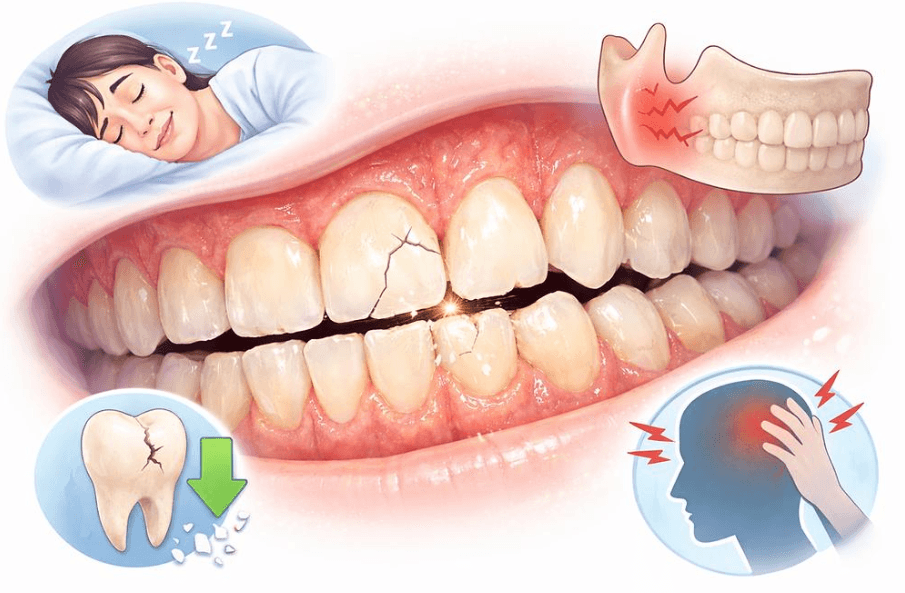
Waking up with a sore jaw, facial tension, or a sensitive tooth may be linked to nighttime teeth grinding or clenching. These habits can place repeated pressure on the teeth and jaw muscles. Over time, excessive force may contribute to tooth wear, cracks, chips, or discomfort around the jaw.
A dental splint may be recommended in some cases to reduce the effects of these forces. However, it is important to understand what a splint is designed to do and why an examination is needed before using one.
What Causes Morning Jaw Pain?
Morning jaw pain may occur when the jaw muscles remain active for extended periods during sleep. Some people clench their teeth without realizing it, while others grind their teeth together.
Signs may include jaw stiffness after waking, headaches around the temples, tooth sensitivity, flattened tooth surfaces, or tenderness when chewing. Cracked or chipped teeth may also develop when teeth are repeatedly exposed to excessive forces.
However, these symptoms can have different causes. A dental examination may help determine whether grinding or clenching is contributing to the problem.
How Does a Dental Splint Work?
A dental splint, sometimes called a night guard or occlusal appliance, is designed to create a protective barrier between the upper and lower teeth. Depending on the appliance and the patient’s circumstances, it may reduce direct tooth-to-tooth contact during sleep.
A properly assessed and fitted appliance may help protect teeth from some of the effects associated with grinding. It may also reduce the forces placed on certain dental restorations.
A splint does not necessarily stop a person from grinding or clenching. Instead, its purpose may be to manage some of the effects of these habits. The design and fit of the appliance matter, which is why professional assessment is important.
Can a Splint Prevent Cracked Teeth?
A splint may help reduce mechanical stress on teeth, but it should not be presented as a guarantee against cracks. Teeth can become damaged for several reasons, including previous restorations, weakened tooth structure, trauma, decay, and excessive biting forces.
If you already have a cracked tooth, wearing an appliance without first having the tooth examined may not address the underlying problem. A dentist may need to determine whether the crack affects only the surface or extends deeper into the tooth.
Someone searching for a dentist in Sarnia can discuss recurring morning jaw pain, tooth sensitivity, or signs of grinding during a dental examination.
Why Proper Assessment Matters
A dentist may evaluate your teeth, bite, jaw movement, existing restorations, and symptoms before recommending a splint. The appliance should be selected based on your individual circumstances.
RCDSO’s consent guidance emphasizes that patients should receive relevant information about proposed treatment, including expected benefits, material risks, alternatives, and the likely consequences of not proceeding. This supports informed decision-making rather than assuming that one treatment is appropriate for everyone.
If sedation or general anesthesia is proposed for another dental procedure, additional assessment and safety requirements apply under RCDSO standards.
What Should You Do About Morning Jaw Pain?
Do not ignore recurring jaw discomfort or repeated tooth damage. Keep track of symptoms such as morning stiffness, headaches, tooth sensitivity, or visible chips and cracks. This information may help your dental team assess possible contributing factors.
Treatment may involve a splint, restorative dental care, behavioural changes, or another approach depending on the findings.
Discuss Jaw Pain and Tooth Damage With Brights Grove Dental!
If you regularly wake with jaw discomfort or have noticed chipped, worn, or cracked teeth, Brights Grove Dental can assess your symptoms and discuss appropriate options based on your individual dental needs. Understanding the possible cause may help you make an informed decision about your care.