
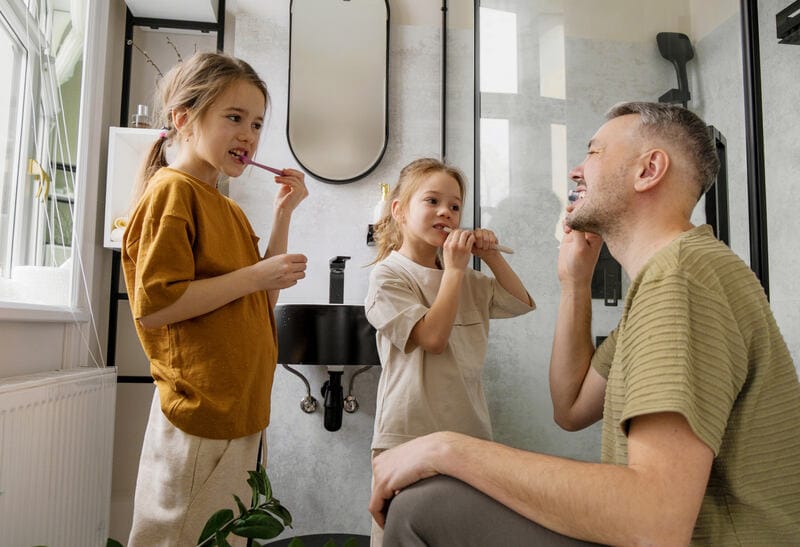
Teaching children proper oral hygiene habits is one of the most valuable gifts parents can give. At Brights Grove Dental, we understand that getting kids excited about brushing and flossing can be challenging. However, establishing these habits early sets the foundation for a lifetime of healthy smiles. Here are practical tips to help your children master effective brushing and flossing techniques.
Start Early and Make It Fun
The journey to good oral health begins as soon as that first tooth appears. Your family dentist will tell you that even baby teeth require proper care. Transform brushing time into an enjoyable activity by playing your child’s favourite song for two minutes, using a colourful toothbrush with their favourite character, or creating a brushing chart with fun stickers as rewards. When children associate dental care with positive experiences, they’re more likely to maintain these habits throughout their lives.
Demonstrate Proper Technique
Children learn by watching, so brush your teeth together and demonstrate the correct technique. Show them how to hold the toothbrush at a 45-degree angle to the gums and use gentle circular motions. Explain that they need to brush all surfaces of their teeth, including the front, back, and chewing surfaces, as well as their tongue. During your regular dentist cleaning appointments, our dental hygienists can also demonstrate proper techniques and answer any questions your child might have.
Choose Age-Appropriate Tools
Using the right tools makes a significant difference in effectiveness. Select a soft-bristled toothbrush sized appropriately for your child’s mouth, and replace it every 3 to 4 months or when the bristles become frayed. Electric toothbrushes can be particularly engaging for children and often include built-in timers to ensure they brush for the recommended two minutes. Use fluoride toothpaste in the correct amount: a rice-grain size for children under three and a pea-sized amount for children three and older.
Introduce Flossing Early
Many parents overlook flossing, but it’s essential for removing plaque and food particles between teeth where toothbrush bristles can’t reach. Start flossing as soon as your child has two teeth that touch. For younger children, floss picks or holders designed for kids make the process easier and more manageable. As children develop better dexterity, usually around age eight to ten, teach them to floss independently using traditional dental floss.
Establish a Consistent Routine
Consistency is key to forming lasting habits. Set specific times for brushing, ideally after breakfast and before bed, and stick to this schedule daily. Make it a non-negotiable part of your family’s routine, just like getting dressed or eating meals. This predictability helps children understand that oral care is simply part of taking care of themselves.
Regular Dental Visits Matter
Schedule regular check-ups with your dentist every six months. Professional dentist cleaning appointments not only help keep teeth healthy but also allow your family dentist to monitor your child’s oral development and catch potential issues early. These visits help children become comfortable with dental care and reinforce the importance of maintaining good oral hygiene at home.
Lead by Example
Children mirror their parents’ behaviours, so demonstrate your commitment to oral health. Let your kids see you brushing and flossing regularly, and talk positively about dental care and visits to the dentist. When parents prioritize their own oral health, children understand it’s an important part of overall wellness.
Address Concerns with Patience
If your child resists brushing or flossing, stay patient and avoid making it a power struggle. Try different approaches, such as letting them choose their toothbrush or toothpaste flavour, or taking turns brushing each other’s teeth. If challenges persist, consult with your family dentist for additional strategies tailored to your child’s specific needs.
At Brights Grove Dental, we’re committed to helping families establish healthy dental habits that last a lifetime. By making oral care engaging, consistent, and positive, you’re setting your children up for years of beautiful, healthy smiles.